
Communication difficulties
1 in 5 people we spoke to experienced communication difficulties caused by a brain tumour diagnosis.

Short summary
Brain tumours or their treatment can sometimes lead to communication difficulties. These could be difficulties with speech or language, or struggling to understand a conversation.
It’s important to remember that not everybody who is affected by a brain tumour will experience communication difficulties.
For those that do, the symptoms and severity can differ from person to person, so you may not have the same problems as someone with a similar diagnosis and treatment plan.
On this page:
- What communication difficulties might someone with a brain tumour experience?
- What causes communication difficulties?
- Coping with communication difficulties
Get support
It’s normal to feel shocked if you or someone you know has been diagnosed with a brain tumour. Our Support Team can answer questions you have or provide a listening ear if you need one.
Get your free Information Pack
Our Brain Tumour Information Pack can help you better understand your diagnosis and feel confident talking to your medical team.
Join our online support groups
Our online support groups are a great place to connect with other people affected by a brain tumour.
What communication difficulties might someone with a brain tumour experience?
There is a range of different communication difficulties that you may experience:
- language impairment (also known as ‘aphasia’)
- speech difficulties
- cognitive difficulties can lead to communication difficulties due to forgetting words, losing the thread of a conversation, or not knowing when to talk and when to listen during a conversation.
What causes communication difficulties?
Position of the tumour
Whether and how a brain tumour affects your communication skills will depend largely on where it is in the brain. Each section or lobe of the brain is responsible for different functions, some of which are involved in communication.
For example, the frontal lobe is involved in language production and the temporal lobe is involved in understanding language. As a result, if your tumour is in one of these lobes, pressure from the tumour itself, swelling around it or treatment directed at that area may have an effect on your communication skills.
The brain is also divided into two hemispheres – left and right. The side on which your tumour is located, as well as the lobe, can affect the type and likelihood of communication effects. If your tumour is located in the left hemisphere, you are more likely to experience language and speech difficulties, as this is where the language areas are generally found. (It is important to note that for some people, the language areas are found in the right hemisphere.)
Treatment
Brain tumour surgery can also cause communication difficulties, if the area of the brain operated on is involved in communication. These effects may be temporary and reduce with recover, but some effects may be more permanent if that area is removed or damaged.
Coping with communication difficulties
The ability to communicate is something we often take for granted. When communication difficulties occur, they can make us feel frustrated, angry, embarrassed and isolated.
But, it’s important to remember that communication is a two-way process. As well as strategies that make communication easier if you’re living with a brain tumour, there are ways for family and friends to listen better and speak more clearly.
We’ve spoken to people affected by brain tumours and healthcare professionals to collect tips that make it easier to cope with communication communication difficulties.
Join one of our Online Support Communities for more tips about coping with a brain tumour diagnosis, from people who truly understand what you’re going through.
Support and Information Services
Research & Clinical Trials Information
You can also join our active online community.
In this section
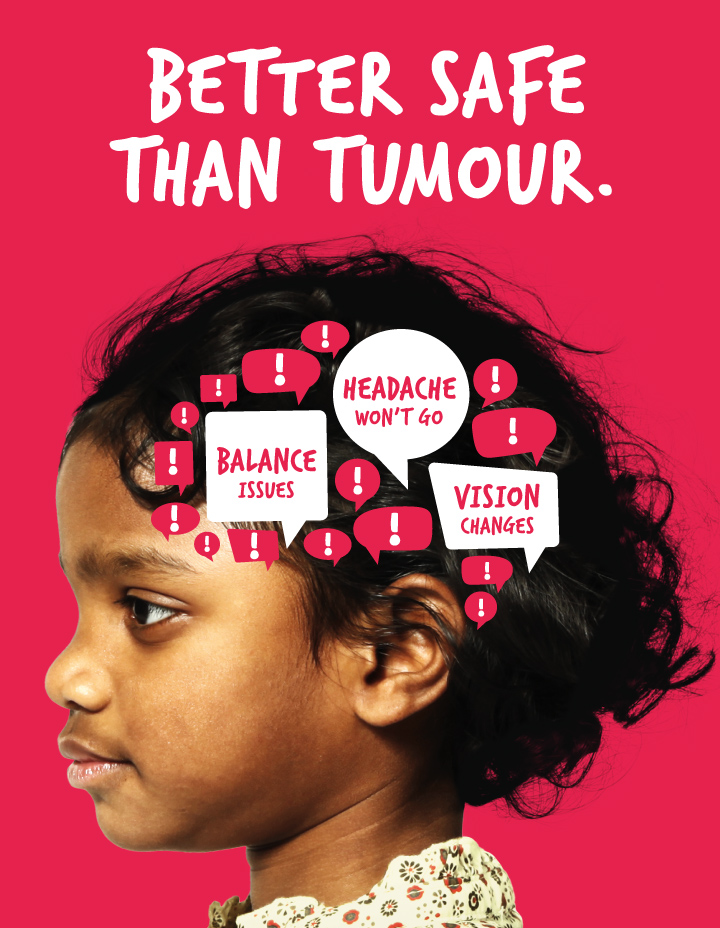
Know the Signs and Symptoms
Although brain tumours are rare, if you or a loved one are experiencing two or more of the signs and symptoms it’s important that you speak to your doctor to rule out a brain tumour.

Get support
If you need someone to talk to or advice on where to get help, our Support and Information team is available by phone, email or live-chat.
Recommended reading

Share your experiences and help create change
By taking part in our Improving Brain Tumour Care surveys and sharing your experiences, you can help us improve treatment and care for everyone affected by a brain tumour.